How to Cleanse the Body the Right Way
Cleansing the body is not about intensity, extremes, or doing everything at once.
It is about order.
Most detox problems don’t come from weak bodies or “too many toxins.”
They come from skipping steps.
The body already knows how to detox. The role of a proper cleanse is to stop interfering with that process and support it in the correct sequence.
This framework follows how human biology actually works.
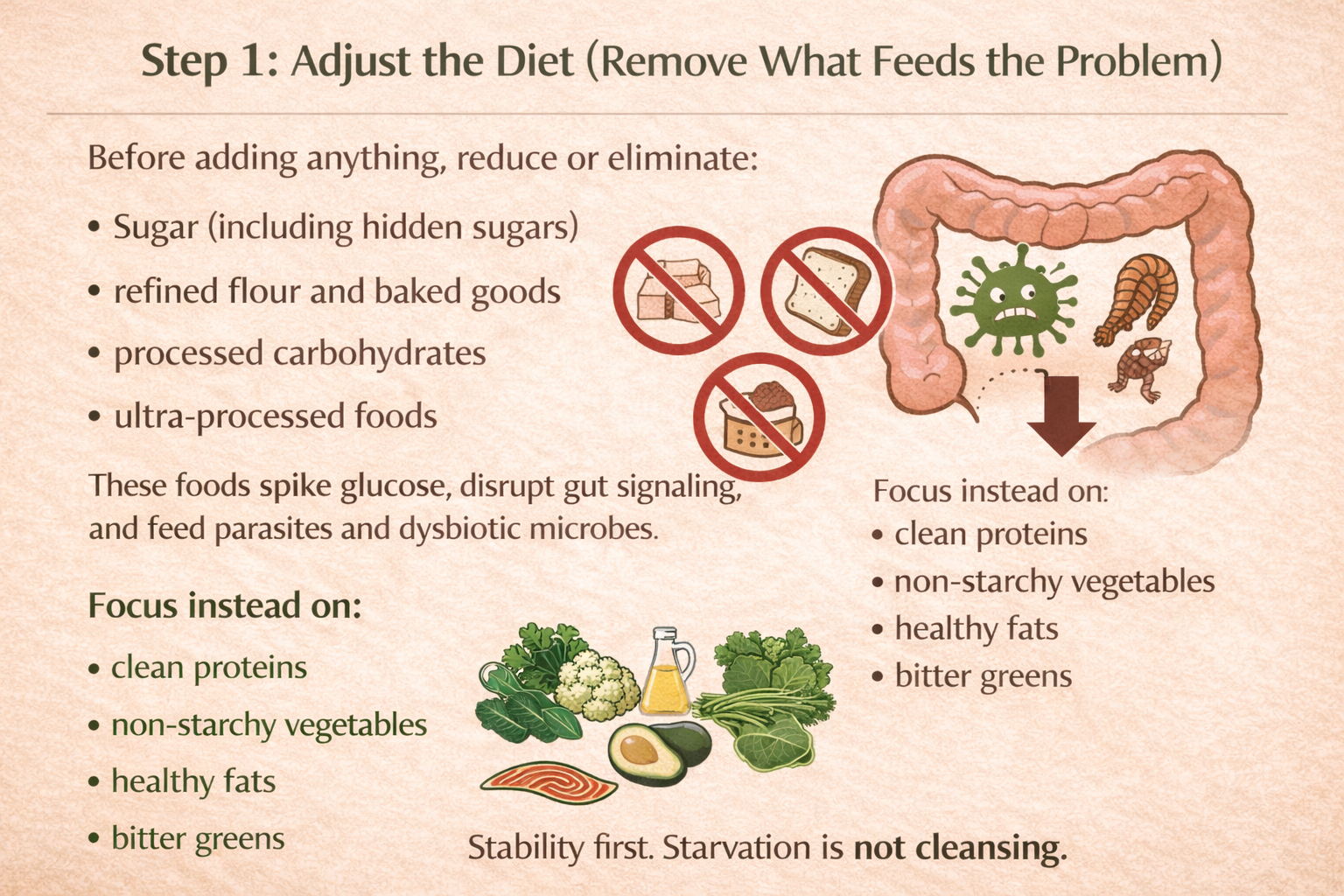
Step 1: Diet — Controlling the Input
Before supplements, binders, or protocols, diet sets the terrain.
Food influences:
▪️ inflammation
▪️ fermentation in the gut
▪️ blood sugar stability
▪️ digestive signaling
Diet during cleansing is not about fasting or restriction.
It’s about stability.
Removing sugar, refined flour, and ultra-processed carbohydrates lowers toxic byproducts immediately and reduces strain on detox pathways.
Pro Tips
▪️ Eat regular meals to support gut motility
▪️ Combine carbohydrates with protein and fat
▪️ Use bitter foods to support bile flow
▪️ Strong cravings often signal blood sugar instability
When food stops feeding the problem, clearance becomes possible.
Step 2: Lymphatic Drainage — Moving What’s Stuck
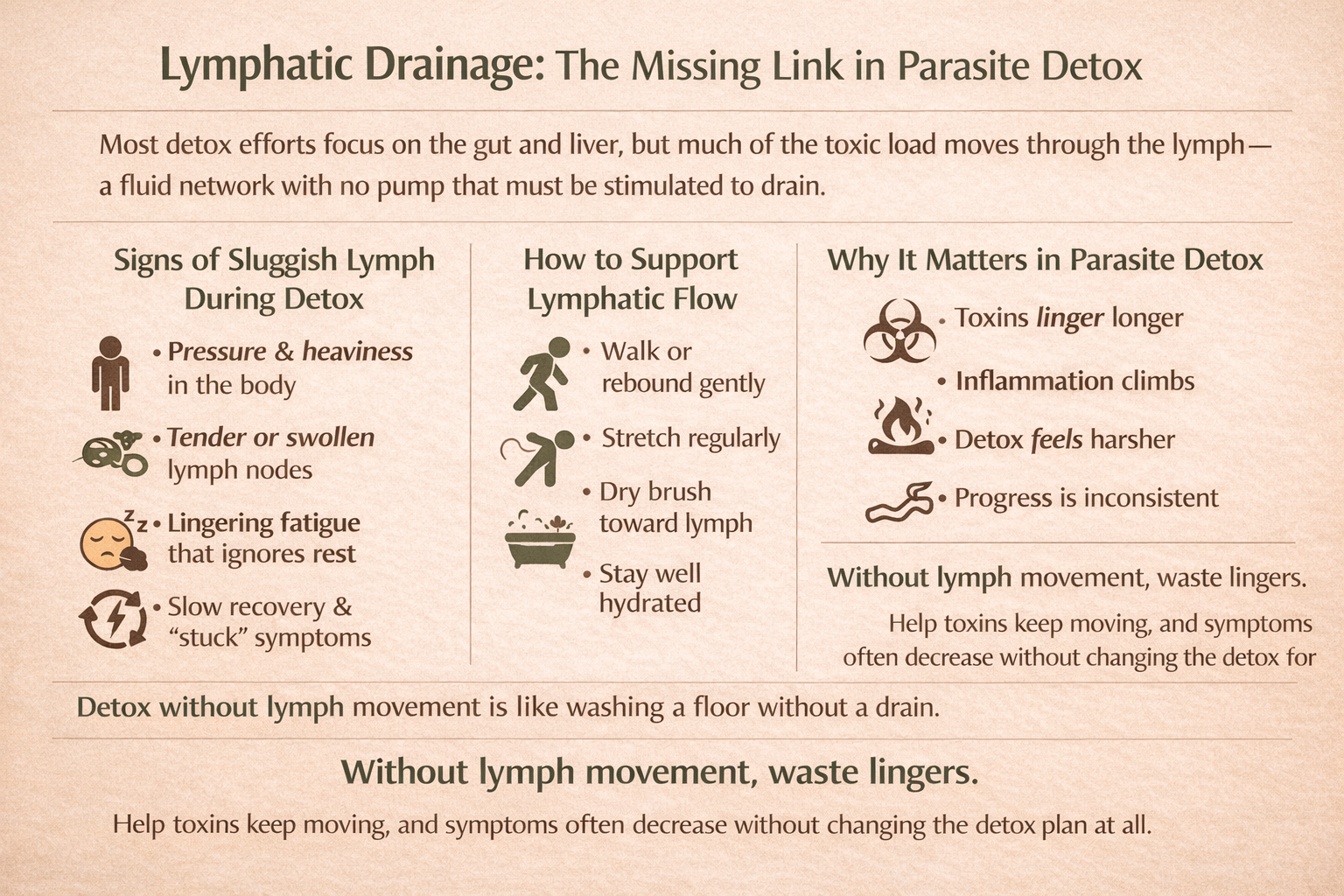
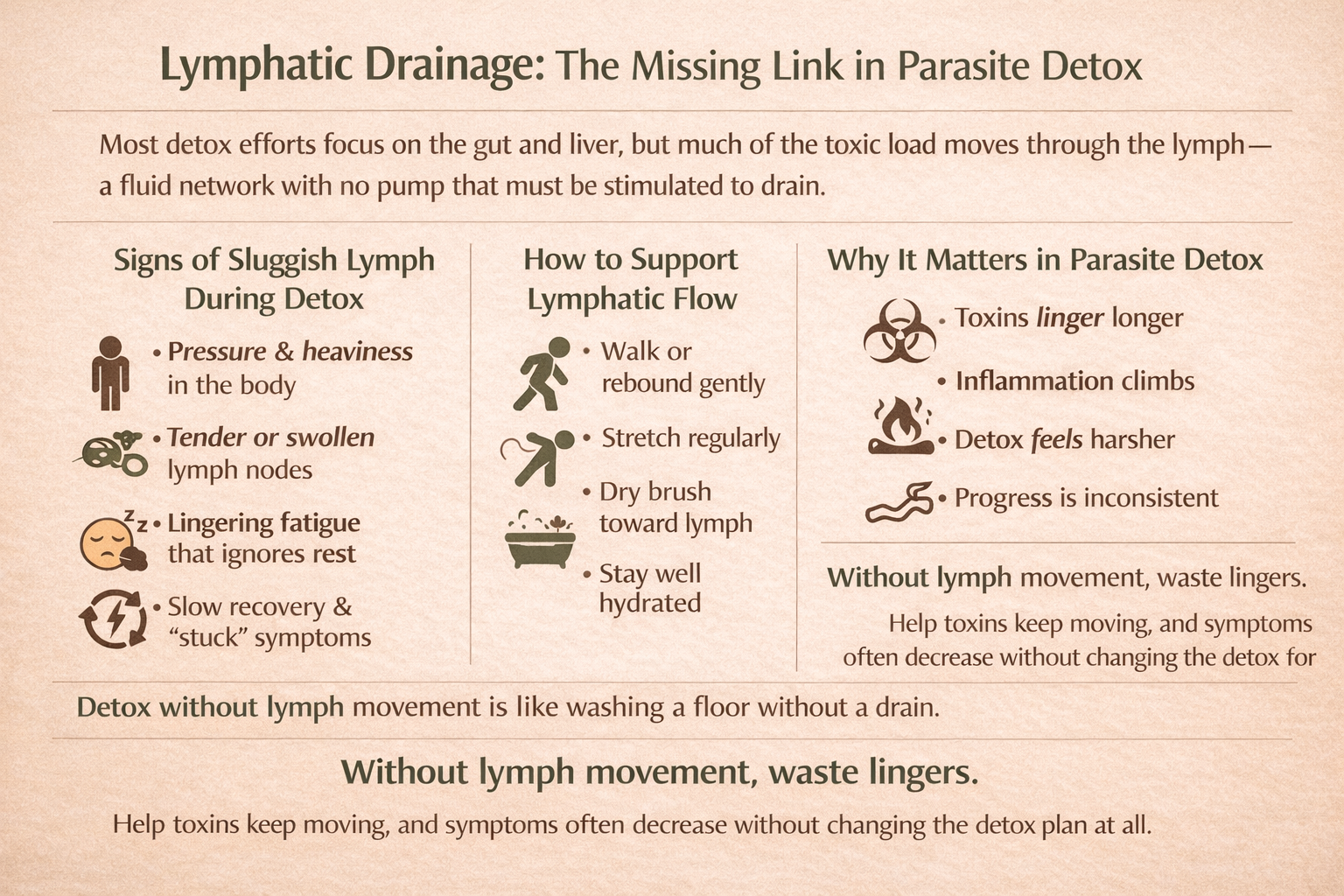
Once input is clean, movement becomes the priority—specifically lymphatic movement.
The lymphatic system:
▪️ transports waste from tissues
▪️ has no pump of its own
▪️ depends on movement, hydration, and rhythm
If lymph stagnates, detox feels heavy regardless of diet or supplements.
Pro Tips
▪️ Light daily movement works better than intense exercise
▪️ Dry brushing is most effective before showers
▪️ Hydration is essential for lymph flow
▪️ Warmth supports movement during detox phases
When lymph flows, symptoms often ease without changing anything else.
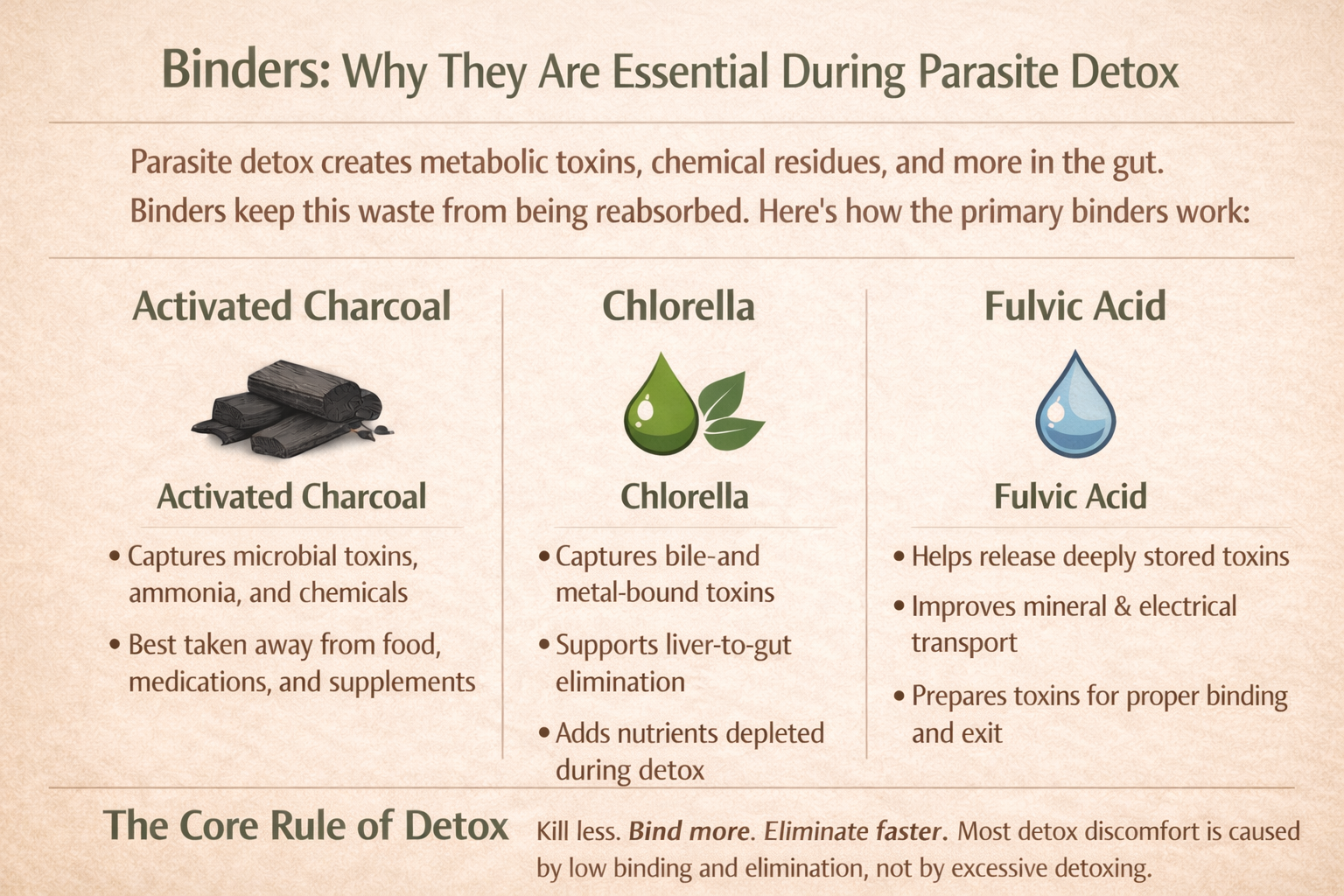
Step 3: Binding — Preventing Detox From Backfiring
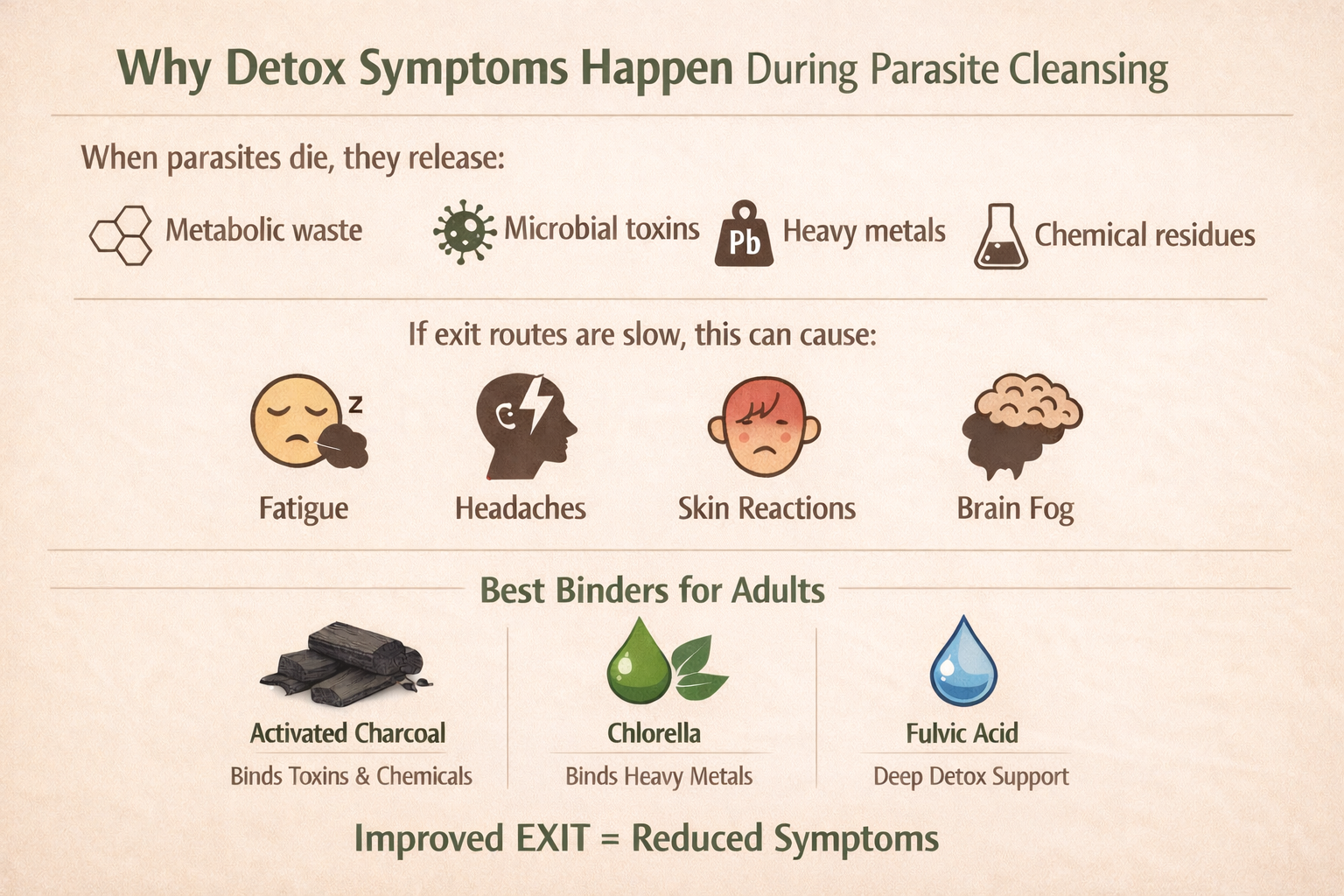
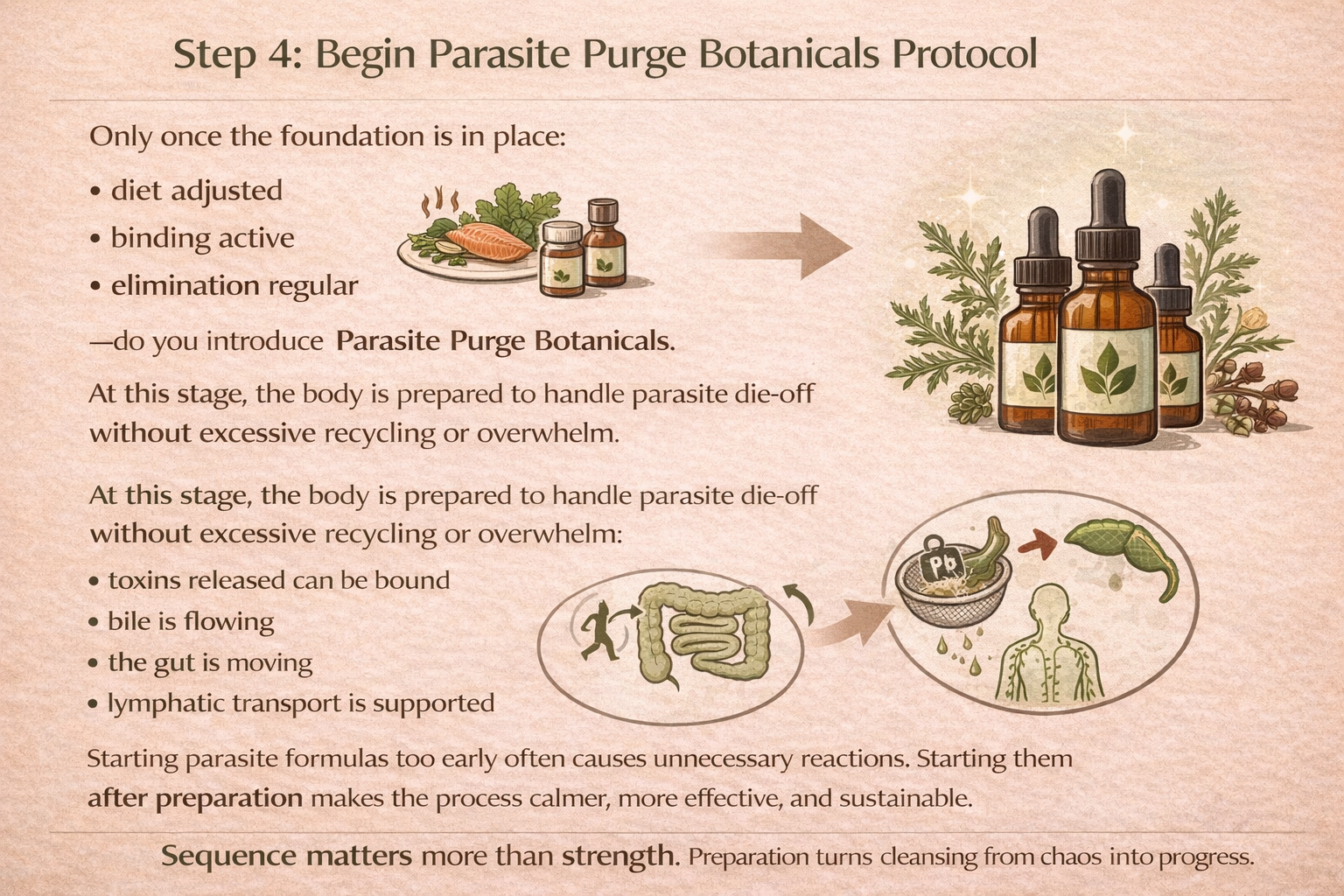
Detox releases waste by design.
If that waste is not captured, it recirculates.
Binding is not aggressive.
It is containment.
Binders work in the digestive tract to capture:
▪️ microbial toxins
▪️ bile-bound waste
▪️ metabolic byproducts
Pro Tips
▪️ Take binders away from food and supplements
▪️ Consistency matters more than high doses
▪️ Overbinding can slow elimination
▪️ Symptom spikes often signal poor elimination, not intolerance
Binding turns detox from chaos into control.
Step 4: Elimination — The Exit That Finishes Detox
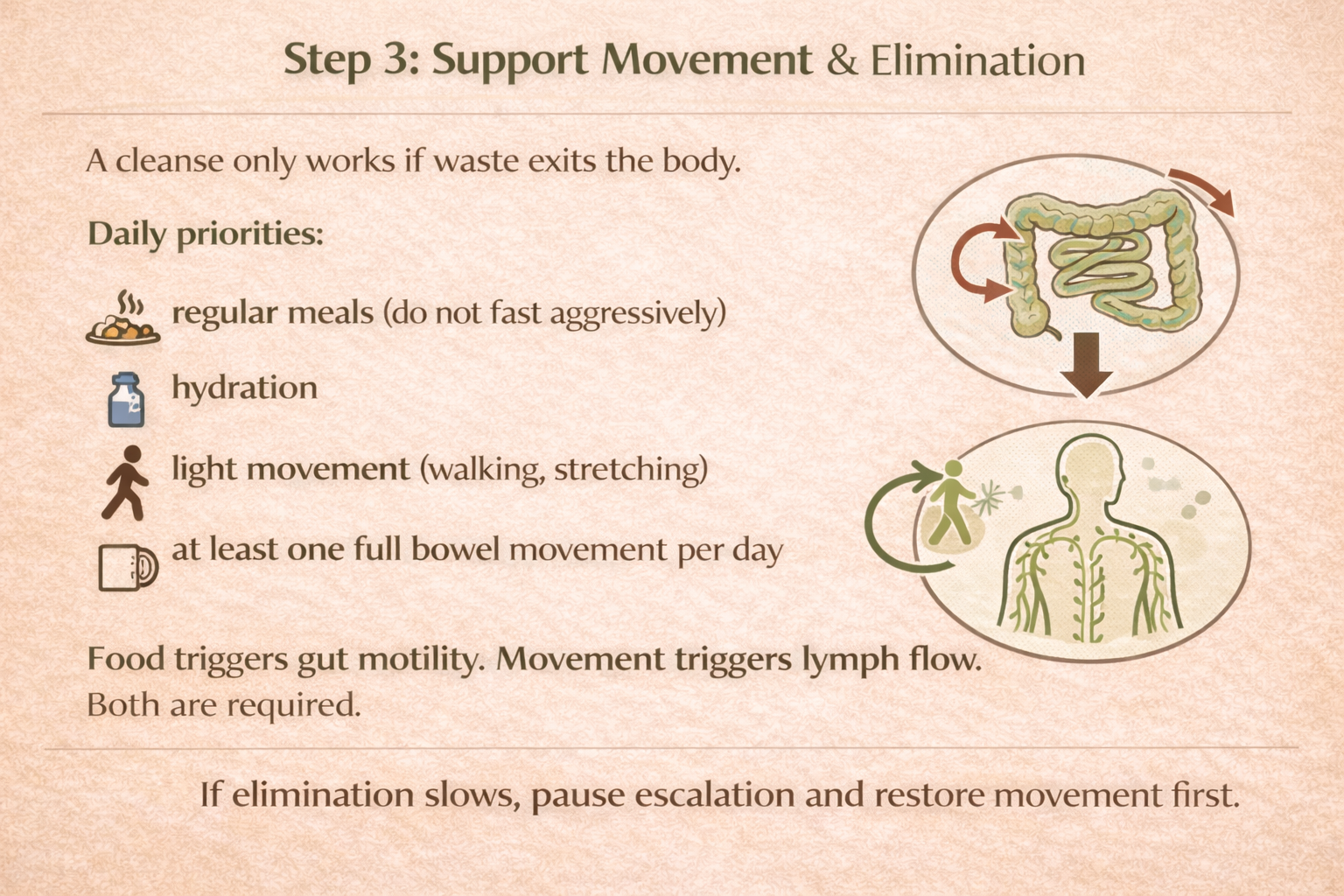
Detox does not end in the liver.
It ends in elimination.
If waste does not leave the body, it will be reabsorbed.
Effective elimination depends on:
▪️ gut motility
▪️ bile flow
▪️ hydration
▪️ regular rhythm
Pro Tips
▪️ One bowel movement daily is the minimum
▪️ Magnesium often helps when fiber alone does not
▪️ Skipping meals slows gut signaling
▪️ Skin reactions often reflect poor elimination
If elimination slows, pause escalation and restore exit first.
Step 5: Targeted Protocols — Acting With Precision
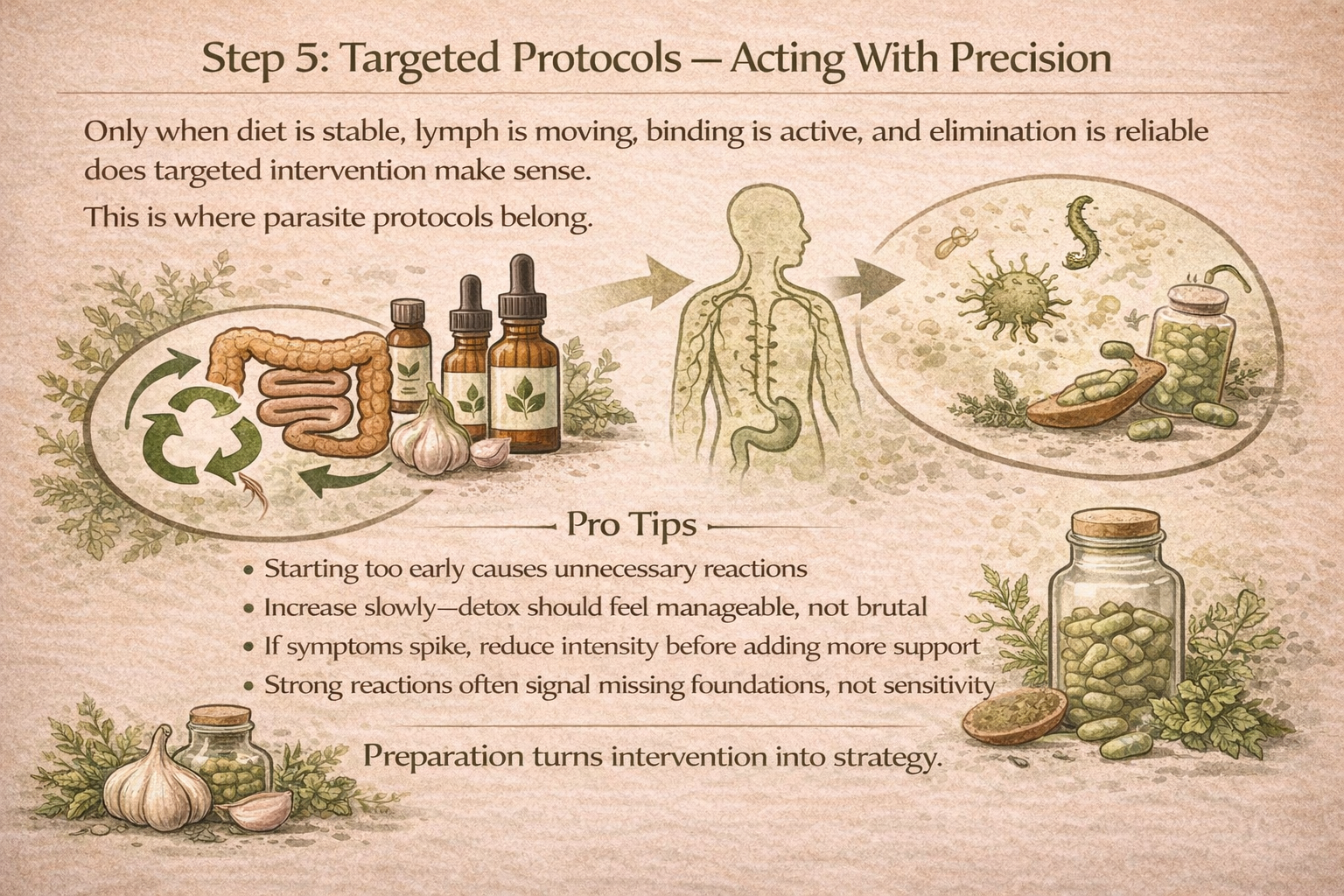
Only when diet is clean, lymph is moving, binding is active, and elimination is reliable does targeted intervention make sense.
This is where parasite protocols belong.
At this stage:
▪️ die-off is manageable
▪️ toxins have clear exit routes
▪️ the nervous system remains calmer
Pro Tips
▪️ Starting too early increases reactions
▪️ Increase intensity slowly
▪️ Strong reactions usually signal missing foundations
▪️ Reduce force before adding more support
Preparation turns intervention into strategy.
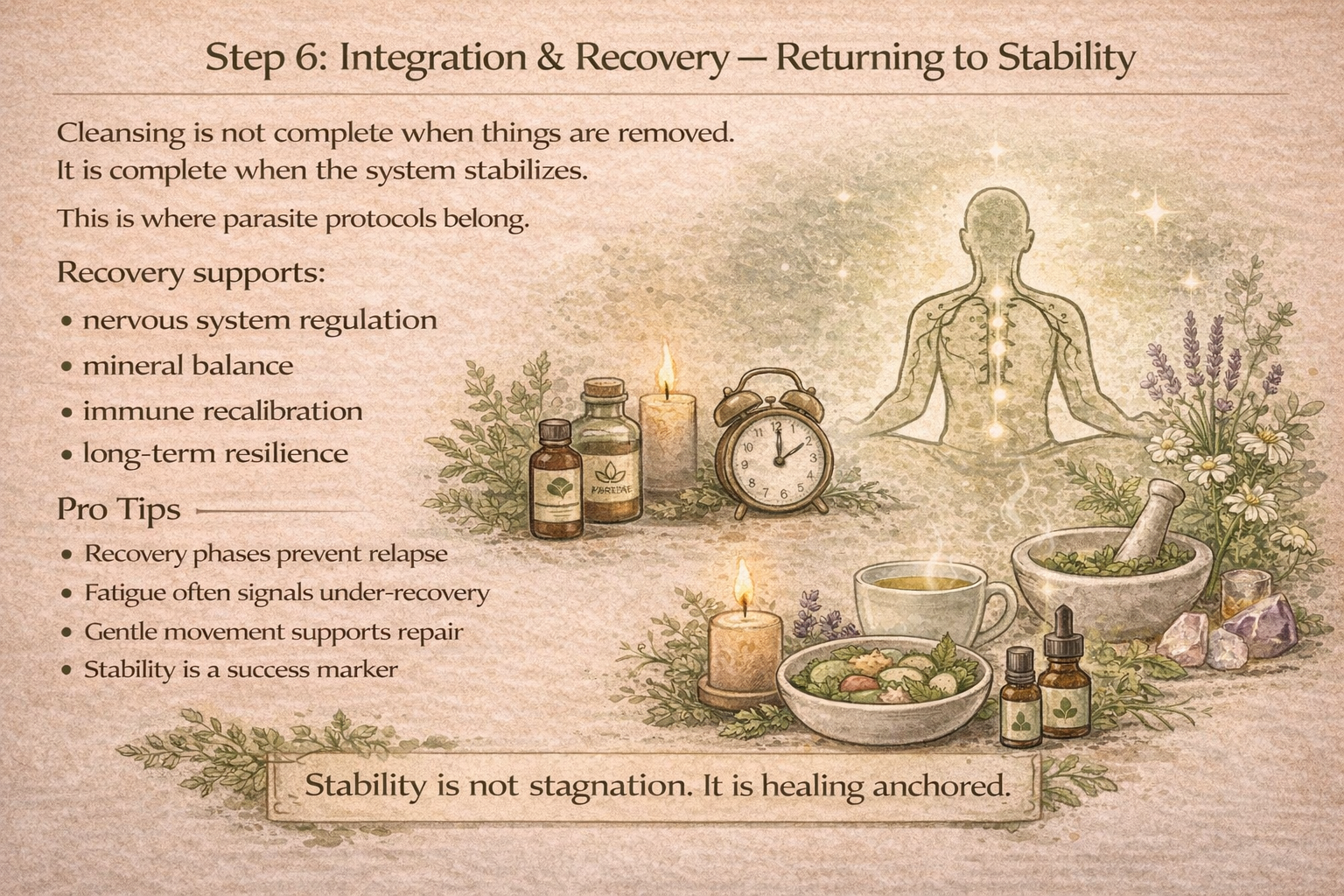
Step 6: Integration & Recovery — Returning to Stability
Cleansing is not complete when things are removed.
It is complete when the system stabilizes.
Recovery supports:
▪️ nervous system regulation
▪️ mineral balance
▪️ immune recalibration
▪️ long-term resilience
Pro Tips
▪️ Recovery phases prevent relapse
▪️ Fatigue often signals under-recovery
▪️ Gentle movement supports repair
▪️ Stability is a success marker
Timing, Maintenance, and Pacing
Cleansing is not linear.
Certain phases—such as the full moon—can increase sensitivity.
During these times:
▪️ focus on maintenance, not intensity
▪️ keep food clean and simple
▪️ support hydration and rest
Pro Tips
▪️ Watch sleep, digestion, mood, and energy as feedback
▪️ Bad days signal adjustment, not failure
▪️ More is rarely better during detox
▪️ Awareness prevents burnout