Most people think detox happens in the liver or the gut. That’s only half the story.
A large portion of detox traffic moves through the lymphatic system—a slow, fluid-based network responsible for transporting immune waste, cellular debris, and fat-soluble toxins. Unlike blood circulation, the lymphatic system has no pump. It only moves when you move.
During parasite detox, this becomes critical.
When parasites break down, waste doesn’t just enter the intestines. It also enters interstitial spaces—the fluid between cells. From there, toxins rely on lymph flow to reach proper exit routes.
If lymph stagnates, symptoms rise.
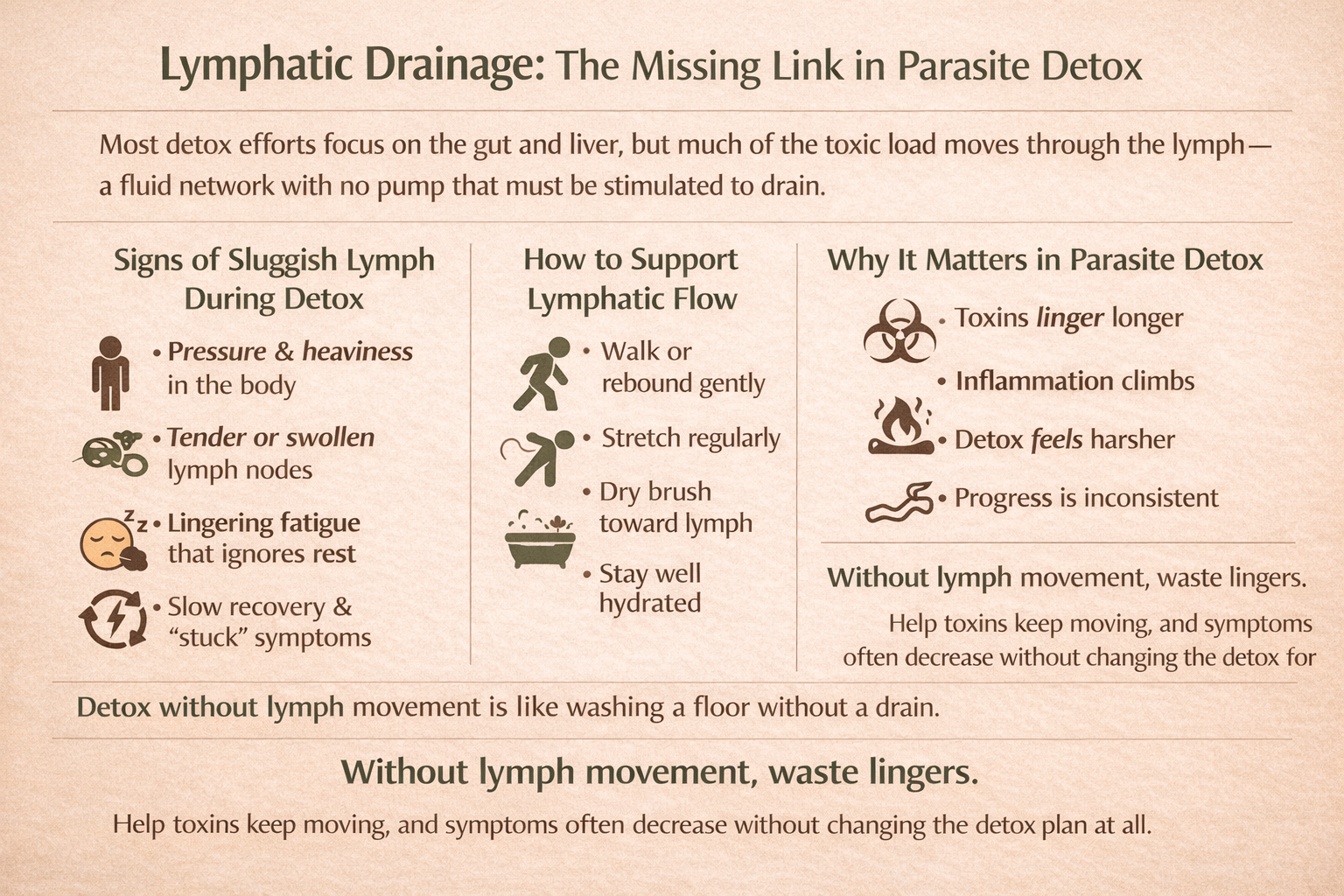
Signs of Sluggish Lymph During Detox
▪️ pressure or heaviness in the body
▪️ swollen or sensitive lymph nodes
▪️ fatigue that doesn’t improve with rest
▪️ slow recovery and “stuck” detox symptoms
This is not toxicity increasing—it’s drainage decreasing.
How to Support Lymphatic Flow
Lymph responds to rhythm and motion, not force.
Key supports include:
▪️ light walking or rebounding
▪️ gentle stretching
▪️ dry brushing toward lymph nodes
▪️ adequate hydration
▪️ warmth (showers, baths)
Aggressive detox without lymph support is like washing a floor without opening the drain.
Why This Matters in Parasite Detox
If lymphatic flow is poor:
▪️ toxins linger longer
▪️ inflammation increases
▪️ detox reactions feel harsher
▪️ progress feels inconsistent
When lymph moves, detox smooths out. Symptoms often decrease without changing the detox protocol at all—because the system can finally clear what’s already been released.
The Principle to Remember
Detox is not just about killing or binding.
It’s about transport.
Move the lymph, and the body remembers how to clean itself.